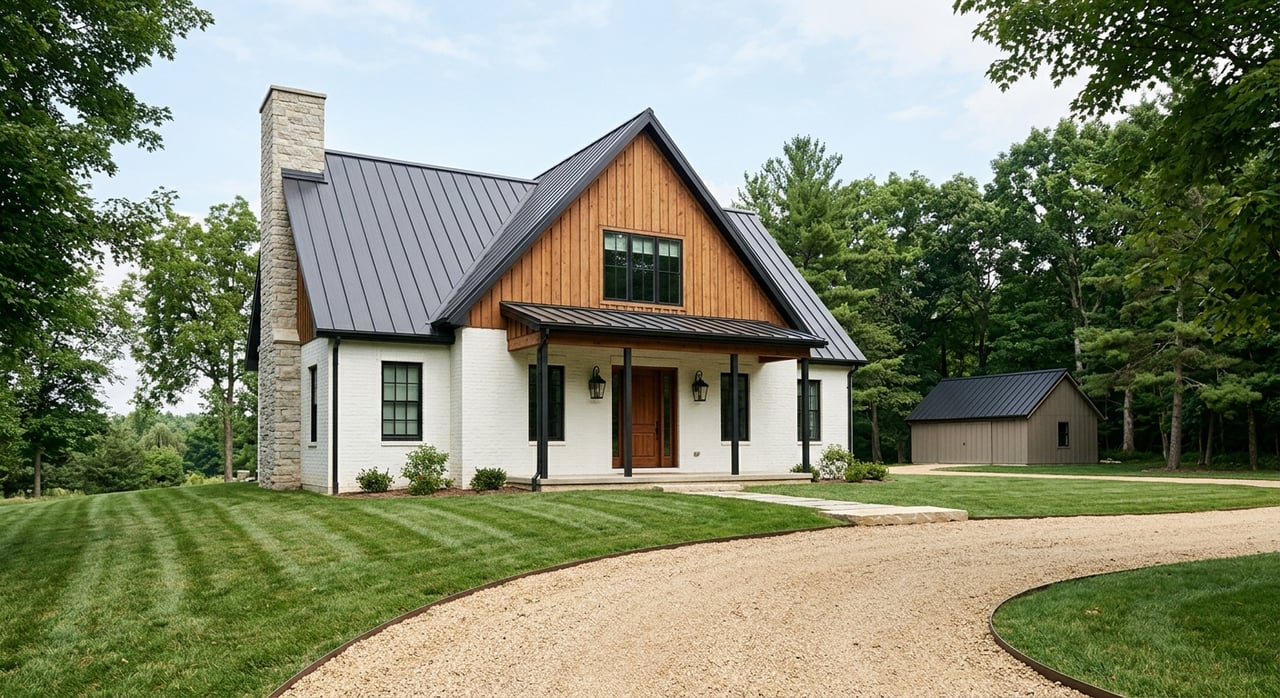
If you love the idea of more land, more privacy, and a little breathing room outside Fenton, Gaines may already be on your radar. Buying in a rural market can feel exciting, but it also comes with questions about lot size, zoning, utilities, and what day-to-day life really looks like. This guide will help you understand what to expect when buying a home in Gaines so you can decide whether the tradeoff between space and convenience fits your goals. Let’s dive in.
Why Buyers Look at Gaines
Gaines Township offers a low-density setting that feels very different from a more typical suburban search. According to the U.S. Census Bureau’s Gaines Township profile, the township had 6,664 residents in 2020 across 35.09 square miles, with a population density of 189.9 people per square mile.
That low density shapes the buying experience. You are more likely to find larger parcels, wider spacing between homes, and a drive-first lifestyle than you would in a tighter neighborhood setting. The same Census profile also reports a 95.5% owner-occupied housing rate and a mean travel time to work of 31.5 minutes, which helps frame Gaines as a place where ownership is common and commuting is part of the routine.
What the Housing Market Looks Like
Home values in Gaines can look different depending on the source and what is being measured. The Census Bureau reports a median value of owner-occupied housing units of $238,300, while Zillow’s home value index for Gaines is $274,480.
Current asking prices can run higher, especially when acreage is involved. Realtor.com’s Gaines market search shows a median listing price of $370,000, with homes averaging 50 days on market.
That matters if you are budgeting based on a standard suburban comparison. In Gaines, land often plays a major role in value, so two homes with similar square footage can be priced very differently based on parcel size, layout, and use potential.
Acreage Is a Big Part of the Decision
One of the clearest patterns in Gaines inventory is the presence of larger lots. Recent listings highlighted by Realtor.com include homes on 1 acre, 1.04 acres, 1.45 acres, 1.95 acres, and 3.33 acres, with asking prices ranging from roughly $300,000 to $600,000.
If you are shopping here, the house is only part of the purchase. You also need to think about how much land you want to maintain, how much separation you want from neighbors, and whether the parcel supports the lifestyle you have in mind.
For some buyers, that extra land means room for a garden, outbuilding, or hobby use. For others, it means more mowing, more upkeep, and more planning before making changes. That is why acreage should be part of your home search criteria from the start, not an afterthought.
Zoning Matters More in Gaines
In a rural market, zoning has a direct impact on how you can use a property. Gaines Township’s zoning ordinance states that the A-R district is intended for sparse single-family development that preserves open space and rural character, while the A-B district is intended to protect agricultural land and reduce conflicts between farm and non-farm uses.
That language tells you a lot about the township’s priorities. Gaines is designed to remain rural in character, which is great if you want elbow room and open space, but it also means you should expect more rules tied to land use than you might in a small-lot subdivision.
Minimum lot sizes are larger
The township ordinance outlines larger minimum lot standards than many buyers are used to. In the A-R district, the minimum lot area is 80,000 square feet, which is about 1.84 acres. In the A-B district, the minimum lot area is 40,000 square feet, which is about 0.92 acre.
Both districts also require a 200-foot minimum lot width. Setbacks are generous too, including a 60-foot front setback in A-R, a 100-foot rear setback in A-R, and a 50-foot rear setback in A-B, based on the township’s posted ordinance materials.
These standards affect more than the look of the neighborhood. They can also shape where a home sits on the lot, where you might place an accessory structure, and how much usable yard area you really have after setbacks are applied.
Rural uses may be allowed
Gaines zoning is friendly to certain small-scale rural uses. The ordinance allows agriculture and agricultural buildings, along with farm markets, roadside stands, and home occupations.
That flexibility is a big reason some buyers choose Gaines over a more conventional suburban location. If you want space for rural living features or a home-based work setup, Gaines may offer options that are harder to find elsewhere.
Animals depend on the property and rules
If you are wondering whether you can keep animals, the answer is not always a simple yes or no. The township ordinance allows some agricultural uses, but livestock operations that exceed certain animal-density thresholds require special use approval.
The ordinance flags thresholds such as 5 or more large farm animals per acre, 20 or more small farm animals per acre, or 500 or more poultry or small field mammals per acre. If that kind of use matters to you, it is smart to review the zoning for the specific parcel before you make an offer.
Can You Split the Land Later?
Many buyers assume acreage automatically creates easy future lot-split potential. In Gaines, that is not something you should assume.
The township’s Agricultural and Rural Residential Zoning Districts chapter explains that in the A-B district, the number of new buildable lots depends on the original lot of record as of March 23, 2006, using a sliding scale. For example, 0 to 9.9 acres can allow 3 lots, 10 to 29.9 acres can allow 4, and larger acreages follow a stepped system.
The key takeaway is simple: more land does not automatically mean easy subdivision. If future splitting is part of your long-term plan, you will want to confirm the parcel history and current township standards early in the process.
Utilities Are Often Parcel Specific
Utilities are one of the biggest practical differences between a rural purchase and a standard in-town purchase. A township planning packet notes that properties in one area are served by private well and septic systems, while the township’s broader utility materials also show posted water and sewer rates.
In other words, you should not assume every property has the same setup. One home may rely on private systems, while another may have access to public utility service.
This is why due diligence matters so much in Gaines. Before you buy, confirm the utility setup for the specific property, not just the general area.
Why this affects your buying process
The utility setup can influence inspections, maintenance expectations, and future improvement plans. If a property uses private well and septic, you may want a clear understanding of condition, service history, and any local health department requirements.
The Genesee County government directory also helps frame how services work regionally, including access to county offices, township services, and major facilities such as Ascension Genesys Hospital in Grand Blanc. In a rural setting, many services are available, but you may be driving farther to reach them.
The Space vs. Convenience Tradeoff
This is really the heart of buying in Gaines. You are often choosing more space, larger setbacks, and more privacy in exchange for greater reliance on your car and longer drives for daily needs.
For many buyers, that is exactly the point. If your goal is room to spread out, a larger parcel, and a setting that feels less crowded, Gaines can be a strong fit.
If you want smaller lots, quick access to dense retail areas, or a more walkable environment, Gaines may feel less convenient. The right choice depends on how you want to live day to day, not just what price point looks attractive online.
Who Gaines Usually Fits Best
Gaines tends to work well for buyers who want:
- More acreage
- Greater privacy
- Larger setbacks
- Garden or hobby-farm potential
- Space for a home occupation
- A rural setting near the Fenton area
It is often a practical option for buyers who are comfortable with a parcel-by-parcel review of zoning and utilities. If you appreciate land and do not mind a drive-first routine, Gaines may offer the kind of flexibility and breathing room that is harder to find closer in.
Smart Questions to Ask Before You Buy
Before you move forward on a home in Gaines, keep these questions in mind:
- How much acreage do you actually want to maintain?
- What zoning district is the property in?
- Are the uses you want allowed under current township rules?
- Is the home served by private well and septic, public utilities, or a mix?
- If you hope to split land later, what does the parcel history allow?
- How comfortable are you with the commute and service access?
A rural purchase can be a great fit when the property matches your real lifestyle. The more clearly you define your must-haves before touring homes, the easier it becomes to spot the right opportunity.
Final Thoughts on Buying in Gaines
Buying a home in Gaines is not just about finding a house near Fenton. It is about deciding whether rural living, larger parcels, and a little more independence match the way you want to live. When you go in with clear expectations about zoning, utilities, land use, and commute tradeoffs, you can make a much more confident decision.
If you are considering Gaines and want local guidance from a boutique brokerage that knows the Fenton-area market, connect with C2C Real Estate. You will get practical advice, personal attention, and insight tailored to the kind of property you are really trying to find.
FAQs
What is rural living in Gaines like for homebuyers?
- Rural living in Gaines usually means larger lots, more privacy, a lower-density setting, and more driving for work, errands, and services.
What price range should buyers expect in Gaines?
- Current benchmarks range from Zillow’s $274,480 home value index to Realtor.com’s $370,000 median listing price, with active acreage listings often running from about $300,000 to $600,000.
Can buyers keep animals on a Gaines property?
- Some agricultural uses are allowed, but whether you can keep animals depends on zoning and animal-density rules for the specific property.
Can buyers split land after purchasing in Gaines?
- Not automatically. In the A-B district, lot split potential depends on the original lot of record and township rules, not just the current acreage.
Do homes in Gaines have public water and sewer?
- Some properties may be on private well and septic, while others may have different utility access, so buyers should verify utilities on a parcel-by-parcel basis.
Is Gaines a good fit for buyers moving from Fenton?
- Gaines can be a strong fit if you want more land and privacy near Fenton and are comfortable with a rural, drive-oriented lifestyle.